
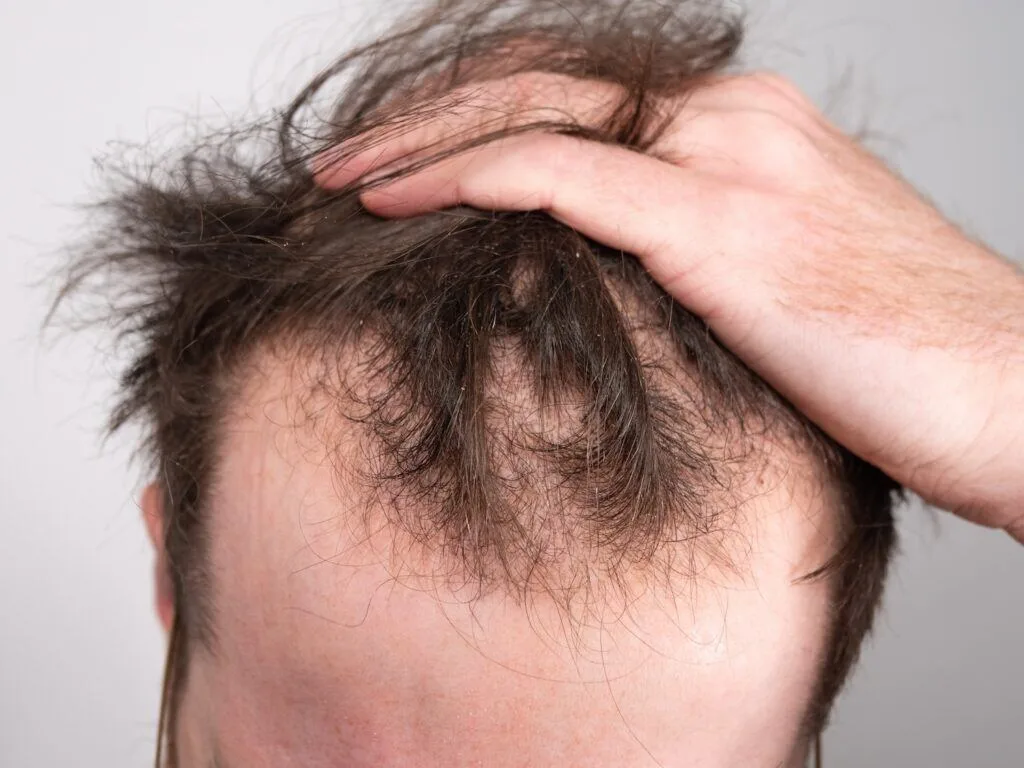
Genetic (androgenetic) hair loss
Androgenetic alopecia — male and female pattern hair loss — is the single most common cause and accounts for the majority of patients we see. It's driven by inherited sensitivity of certain follicles to dihydrotestosterone (DHT), a hormone derived from testosterone.
In men this typically presents as recession at the temples and crown thinning. In women it usually shows up as diffuse thinning across the part and top of the scalp. The progression is gradual, usually predictable, and very treatable when addressed early.
Hormonal & medical causes
Thyroid dysfunction, iron deficiency, postpartum hormonal shifts, polycystic ovary syndrome (PCOS), uncontrolled diabetes, and major illness can all trigger or accelerate hair loss. Many of these are reversible once the underlying issue is addressed — which is why we run a basic medical workup before recommending surgery for most women and many men.
Less obvious contributors
Medications
Certain blood pressure medications, antidepressants, retinoids, anticoagulants, and chemotherapy agents can cause shedding.
Stress shedding
Telogen effluvium follows major stressors — illness, surgery, weight loss — by 2–4 months and usually self-resolves.
Traction
Tight braids, weaves, extensions, and ponytails can cause permanent traction alopecia over time.
Nutrition
Severe calorie restriction, low-protein diets, and crash dieting can trigger diffuse shedding.
Scalp disease
Seborrheic dermatitis, psoriasis, lichen planopilaris, and other scarring alopecias all need direct treatment.
Autoimmune
Alopecia areata is an autoimmune patchy hair loss that responds to specific medical therapy, not transplant.
If you're not sure what's causing your hair loss, that's the consultation.
A 30-minute in-person evaluation usually identifies the cause and the realistic treatment options. We'd rather tell you it's a treatable medical issue than sell you a surgery you don't need.
Frequently asked questions
Can hair loss be reversed?+
Some causes — telogen effluvium, iron deficiency, thyroid issues — are fully reversible. Genetic loss can be slowed and stabilized with medical therapy and partially restored with surgery, but never fully 'reversed' to a teenage state.
Should I see a dermatologist or a hair transplant clinic first?+
Either works for an initial workup. We perform the full evaluation in-house, including labs and scalp exam, before recommending any procedure.
Is my hair loss from stress?+
Possibly — but stress shedding (telogen effluvium) is usually a 2–4 month delayed reaction to a specific event and self-resolves. Long-term thinning is more often genetic.