
Insights · Hair Restoration
Hair Implant Before and After: Real Results & Timeline Explained
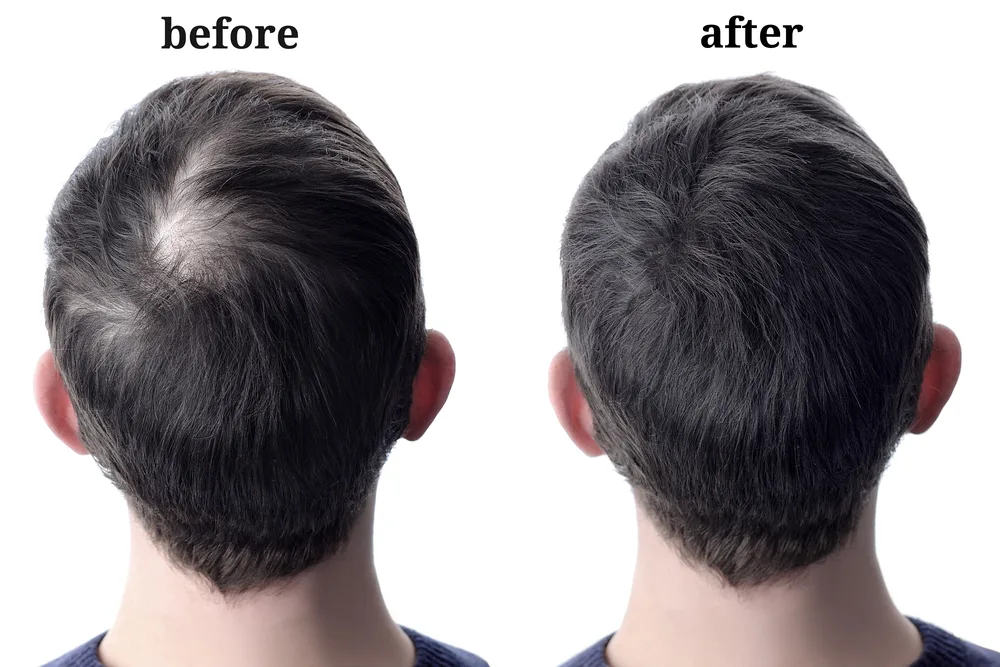
If you are researching hair restoration, you have likely searched for hair implant before and after photos. That is smart. You want proof, realistic expectations, and natural-looking results.
This guide explains what real results look like, how long they take, what 2000 grafts actually means, how long outcomes last, and what affects cost.
What Do Hair Implant Before and After Results Really Look Like?
The best hair transplant results do not look dramatic. They look natural.
Modern FUE techniques place individual follicular units in patterns that match natural hair growth. A well-designed hairline considers your age, facial structure, and long-term hair loss pattern. When done correctly, people usually notice that you look better, not that you had a procedure.
Strong results typically include:
-
A soft, natural hairline
-
Even density that blends with existing hair
-
Correct hair angling and direction
-
No visible linear scar with FUE
Final appearance depends on several factors: the extent of hair loss, donor hair quality, number of grafts, and surgeon experience.
Hair Transplant Before and After Timeline
Hair restoration is a process. Understanding the timeline prevents unnecessary stress. Here’s what typically happens:
Week 1: Immediate Post-Procedure
Mild swelling and redness are common. Small scabs form around each graft. The implanted hairs are visible. The area may look slightly uneven at first. This is temporary.
Weeks 2–4: Shedding Phase
This surprises many patients. The transplanted hairs fall out, this is completely normal and called shock loss. The follicles remain intact under the scalp.
Months 2–3: Dormant Phase
Very little visible growth. This is the patience stage.
Months 3–6: Early Growth
-
Fine, thin hairs begin to emerge
-
Gradual thickening over time
-
Noticeable improvement in density
Months 6–9: Visible Transformation
-
Hair texture improves
-
Density increases significantly
-
Hair begins to look fuller and styled naturally
Months 9–12: Final Results
Most patients see full results at this stage. Hair blends naturally with existing strands. Some continued thickening may occur up to 14 to 18 months.
Patience is essential. Early shedding does not mean the procedure failed.
How Long Does a Hair Implant Last?
This is one of the most common questions. Hair implants are considered permanent.
The transplanted follicles are typically taken from the back or sides of the scalp, areas genetically resistant to hair loss. Once relocated, they retain that resistance.
However:
-
Native hair may continue thinning
-
Maintenance treatments may be recommended
-
A second procedure may be needed years later depending on hair loss progression
With proper planning, results can last decades.
How Much Do 2000 Hair Grafts Look Like?
One of the most common questions patients ask is, “What do 2000 grafts actually look like?”
The answer depends on the area being treated and your natural hair characteristics, but for many patients, 2000 grafts can create a noticeable improvement in the hairline and frontal density.
To put it into perspective:
-
1000 grafts typically refine or slightly lower the hairline.
-
1500 to 2000 grafts can restore a receding hairline and improve frontal thickness.
-
2500 to 3000 grafts are usually needed for broader coverage, such as both the hairline and crown.
On average, 2000 grafts equal approximately 4000 to 5000 individual hairs, since each graft contains one to four hairs.
The visual result depends on several factors, including the size of the treatment area, hair thickness, contrast between hair color and scalp, and whether the hair is straight or curly. Thicker or curlier hair provides more visual coverage, while fine, straight hair may require more grafts to achieve the same density.
For someone with moderate frontal thinning, 2000 grafts can create a strong, natural-looking improvement. It usually restores shape and density without appearing overdone or artificial.
How Realistic Do Hair Transplants Look?
With modern techniques, hair transplants can look very natural.
Older procedures sometimes created obvious, plug-like results. Today, follicular unit grafting places hairs in their natural groupings of one to four hairs. This allows the transplant to match the way hair naturally grows in direction, angle, and density.
When performed by an experienced surgeon, the results are often undetectable. In many cases, even barbers and stylists cannot tell a transplant was done.
The most realistic results happen when:
-
The hairline is age-appropriate
-
Density is layered naturally
-
Crown patterns are carefully recreated
Realism depends less on the number of grafts and more on proper placement, artistic design, and long-term planning.
How Much Do Hair Implants Usually Cost?
Cost varies based on:
-
Technique used (FUE vs FUT)
-
Geographic location
-
Provider expertise
In the U.S., hair implants typically range from $4,000 to $15,000. Many clinics price per graft, often between $3 and $7 per graft. While price matters, experience and artistry matter more. A poorly designed hairline is difficult to correct.
Factors That Influence Hair Implant Results
Not every hair transplant produces the same outcome. Results vary based on your biology, hair characteristics, and surgical planning.
Key factors include:
-
Donor hair density
-
Hair thickness, since thicker hair provides more visual coverage
-
Scalp condition and elasticity
-
Individual healing response
-
Adherence to post-procedure instructions
-
Any underlying medical conditions that affect hair growth
Even with the same number of grafts, two patients can see different levels of density and coverage. A detailed consultation helps set realistic expectations, determine the right graft count, and design a plan that fits your long-term hair loss pattern.
Are You a Good Candidate?
You may be a strong candidate for a hair implant if:
-
Your hair loss pattern is relatively stable
-
You have sufficient donor hair available
-
You are in good overall health
-
You have realistic expectations about density and coverage
It is important to understand that results develop gradually over several months. Patience is part of the process.
Early evaluation allows for better long-term planning. Treating hair loss before it progresses significantly often leads to more natural, balanced outcomes over time.
Your Path to Natural Hair Restoration
Hair implants offer a proven, long-term solution for hair loss when performed with careful planning and realistic expectations. Results develop gradually, with full growth typically visible around one year. Patience and proper aftercare play an important role in achieving the best outcome.
While a transplant restores thinning areas, maintaining long-term density may require a comprehensive strategy as hair loss evolves over time.
At Inside Out Medical, every treatment plan is designed for natural appearance and lasting results. If you are ready to explore your options, schedule a consultation with us and take the next step toward fuller, natural-looking hair.
Talk to a physician
Curious if you're a candidate?
Book a private consultation with Dr. Hernandez. $200 consultation deposit — credited to your treatment.
Related reading
More from our hair restoration insights
Is Hair Transplant Permanent? What to Expect
Is hair transplant permanent? Discover how long results last, what affects longevity, and what Fresno patients…
Best Age for Hair Implant Surgery | When Is the Right Time?
Wondering about the best age for Hair Implant Surgery? Learn when it’s safe, effective, and how age impacts re…
How Surgeons Design a Natural Hairline Transplant
Learn how surgeons design a natural-looking hairline transplant, from facial analysis to graft placement, dens…